💆♂️ October 2026 – Self-Care
Posted October 21st, 2026
I was hoping to speak about something other than my health this month, but my intention with this blog is to show all sides of La Floresta, not just the nice parts. In an era of carefully curated storylines, where picture-perfect moments abound, reality is often much more complex. I think it would be a disservice to my readers if I led them to believe that running a farm is all honeydew melons and pink sunsets. This has probably been the most challenging month of the year for me, and I'm not going to pretend otherwise. In a way, ignoring pain is how I even got into this bind.
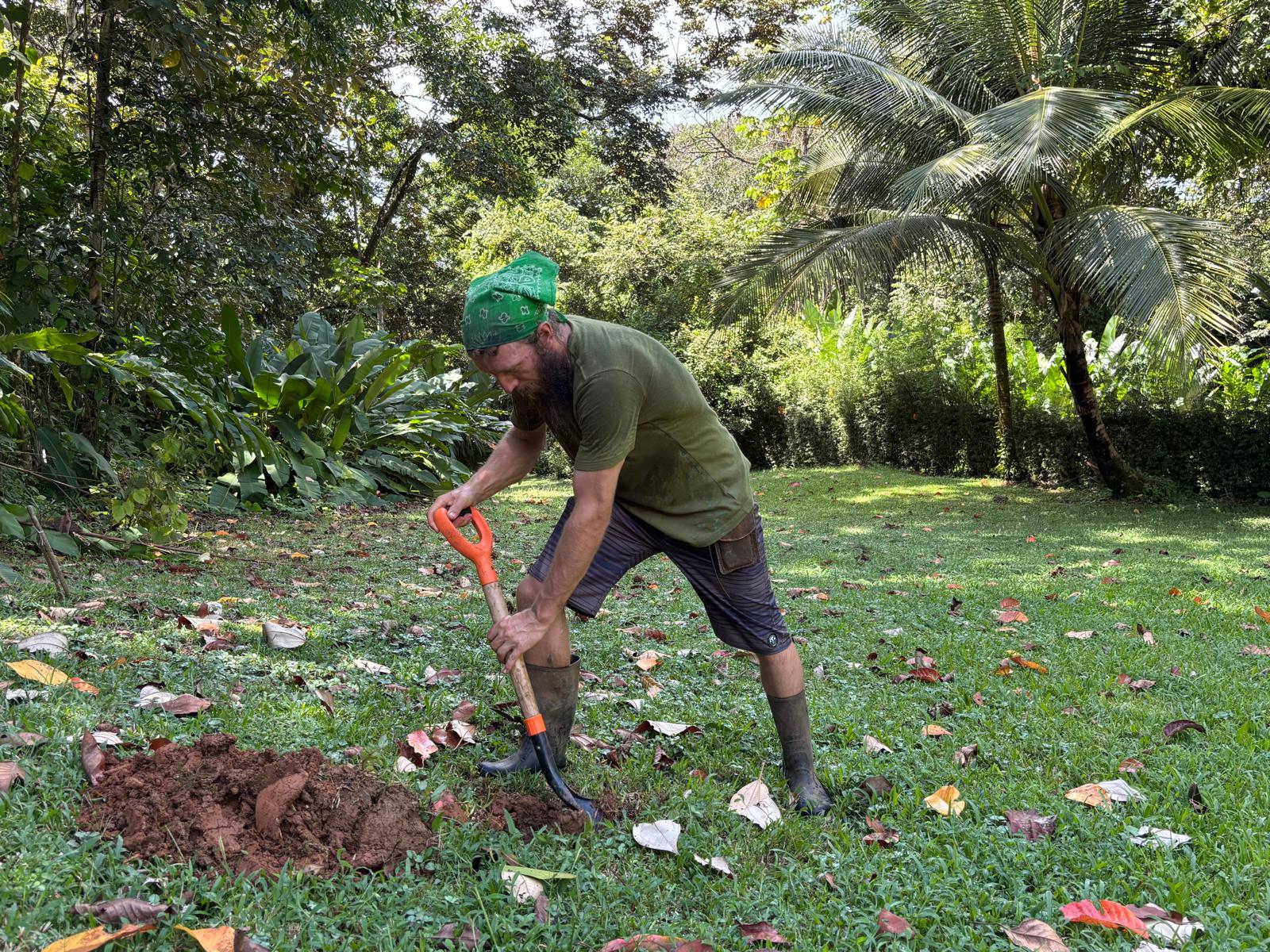
I had been dealing with some mild lower back pain for a few days. I've had plenty of slipped discs before, and I was pushing through it. Ever since my mother-in-law, Isabel, and our volunteer, Agnes, left, all the domestic duties fell onto our already-full hands. I was running around trying to keep all our bases covered and, consequently, ignored my body's warning signs. One day, under the scorching tropical midday sun, probably over-caffeinated, I was digging rich soil out of a swale to make a potting mix. I was working fast and somewhat impatiently, and at some point I made a move that aggravated my already-sensitive back. Again, I ignored the pain and kept working. I filled two wheelbarrows with earth, then transported both of them over 70 meters away and down a hill. Afterwards, I mixed river sand, chicken manure, and a bit of ash into a large mound. In the end, I was mixing on my knees because I couldn't bend over anymore.
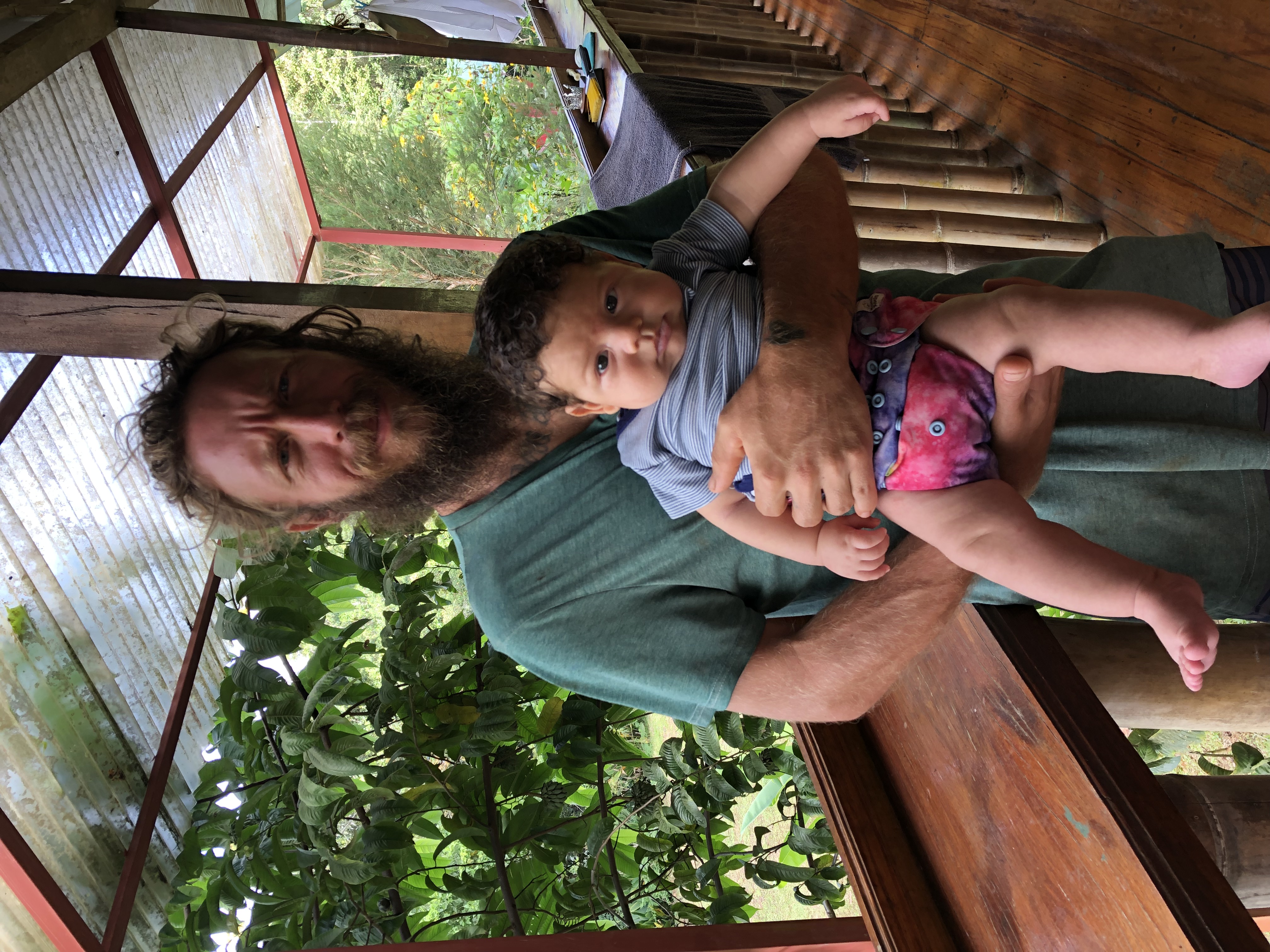
It's been three weeks, and my whole right side—from my lower back to my butt, thigh, calf, and foot—is still frozen up. Meanwhile, I've been learning about the "wonders" of sciatica. The first week, I could barely do anything but hobble around the house for a couple of hours at a time between rests. I still can't sit in a chair for more than ten minutes before it becomes uncomfortable. On the plus side, this has probably contributed to a much closer bond with my two-month-old son, Dante. Since I've been spending much more of my time around the house, being with the baby is something I can thankfully still manage.
I'm already doing some tasks around the farm, yet much more slowly and deliberately. This has been a major test of my tenacity. With my mobility reduced so drastically, it's been just as difficult to deal with mentally as it has physically. I'm at about 50% of what I can normally do. I'm accustomed to being a "swashbuckling campesino," getting things done in the jungle with my machete. Now I have to think twice as long about how I'm going to position myself to get even the simplest task done. This farm is far too big for me to manage in this state. I could just about keep things afloat here, with help, when I'm healthy. Volunteers have been sparse online, and since we've been in serious need of help, we've found some locals to help us both at home and on the farm. Regardless, keeping this farm maintained is no simple task.
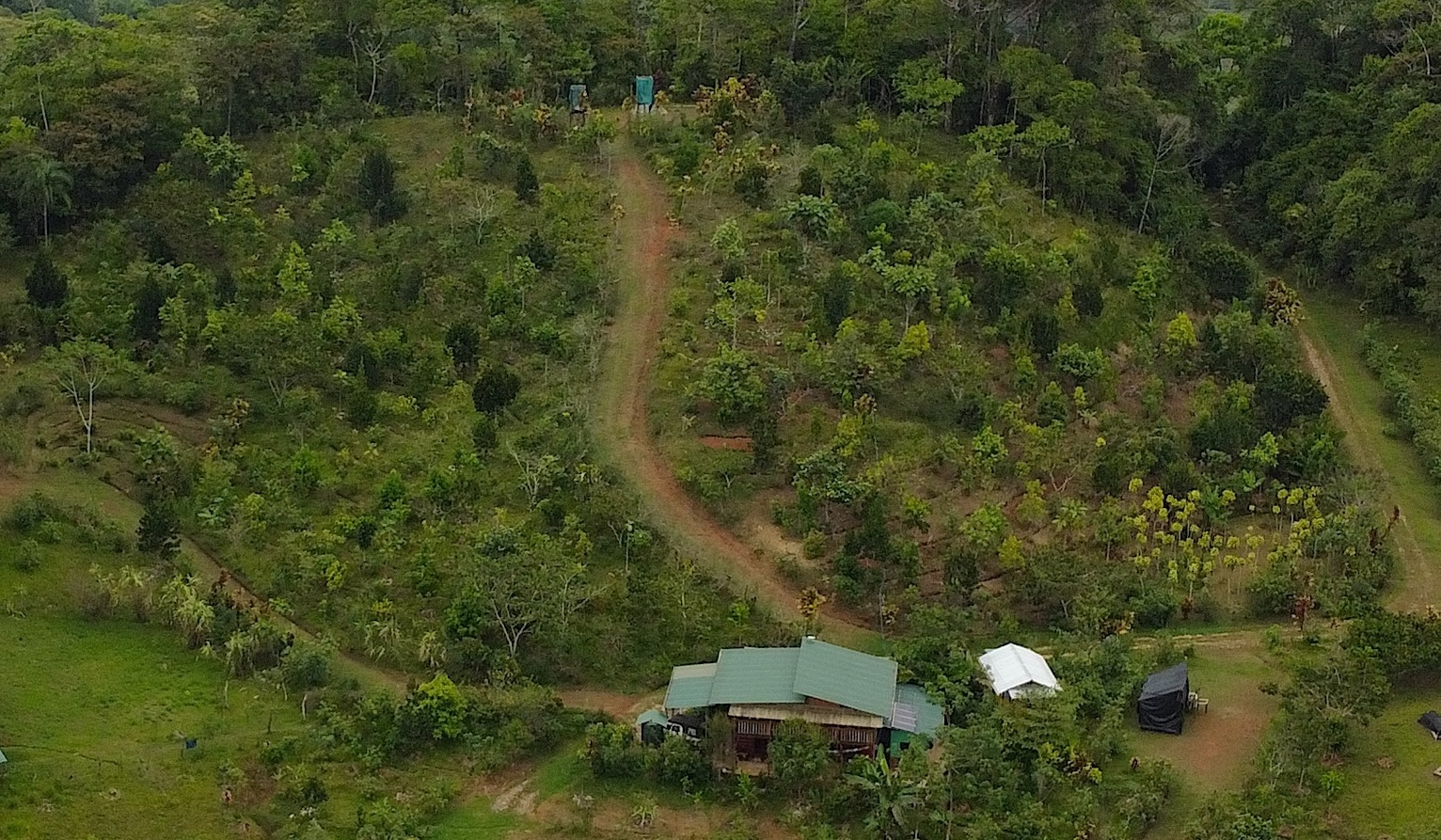
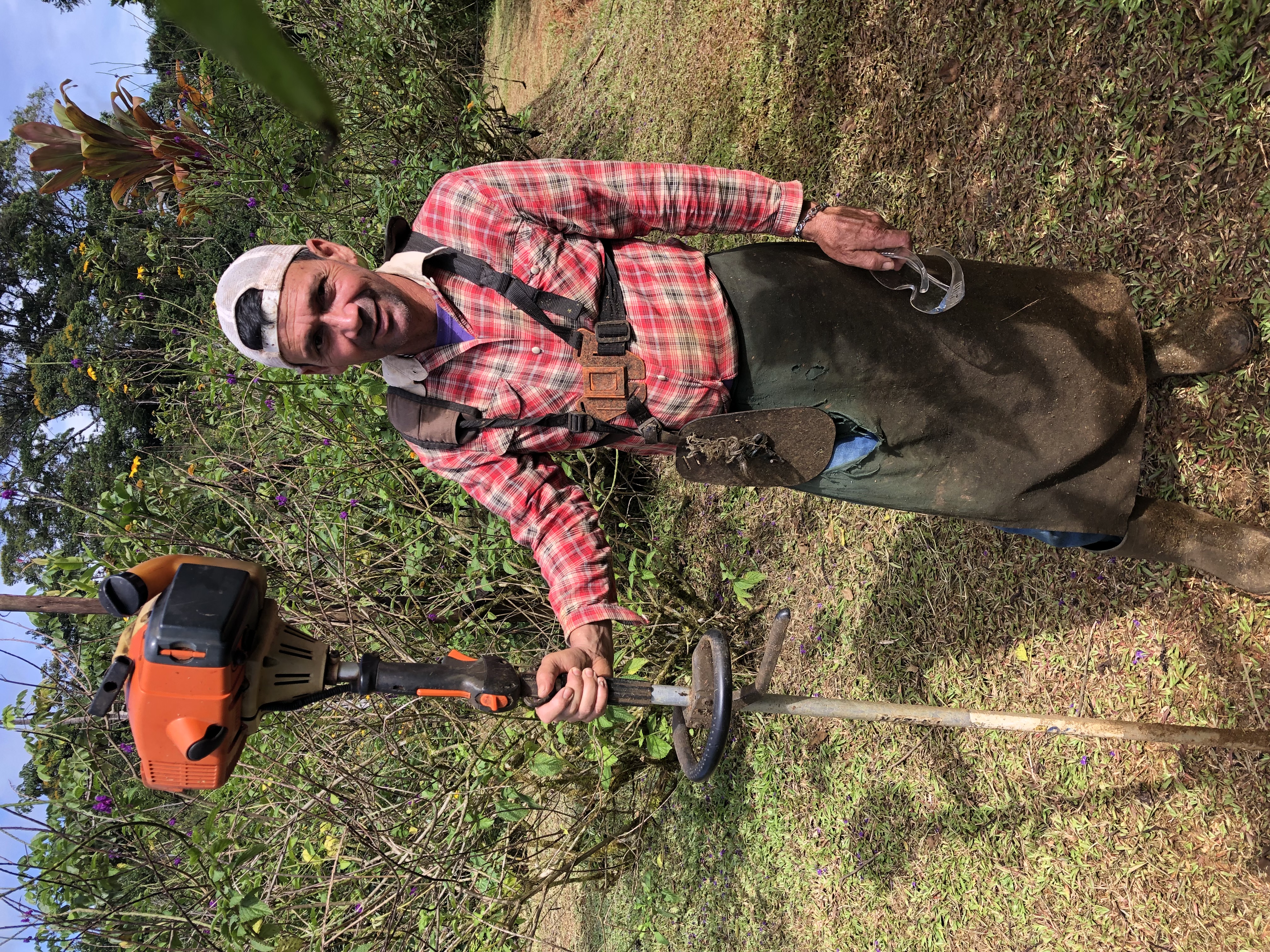
One challenge I've had in the past with local helpers has been teaching them the more intricate details of our permaculture system. Some have taken to it with more enthusiasm than others, but generally, their help has been limited to duties such as weed whacking, which is an unlimited job here. Teaching someone to mulch the trees is much more challenging than getting them to chop the weeds. Cutting weeds simply requires knowing what's a weed and what's not. Mulching requires knowing which plants are fruit trees, which are pollinator attactors, which are nitrogen fixers, and which ones we prune for mulch. On top of that, knowing how to prune properly and distribute the mulch is important. You also need to know how much of a mulch bush to chop so that it grows back vigorously. I usually take the time to explain these things carefully to our volunteers, and we always do the job together. I rarely let people mulch alone until they've become well acquainted with the local flora and our techniques, which can take months.
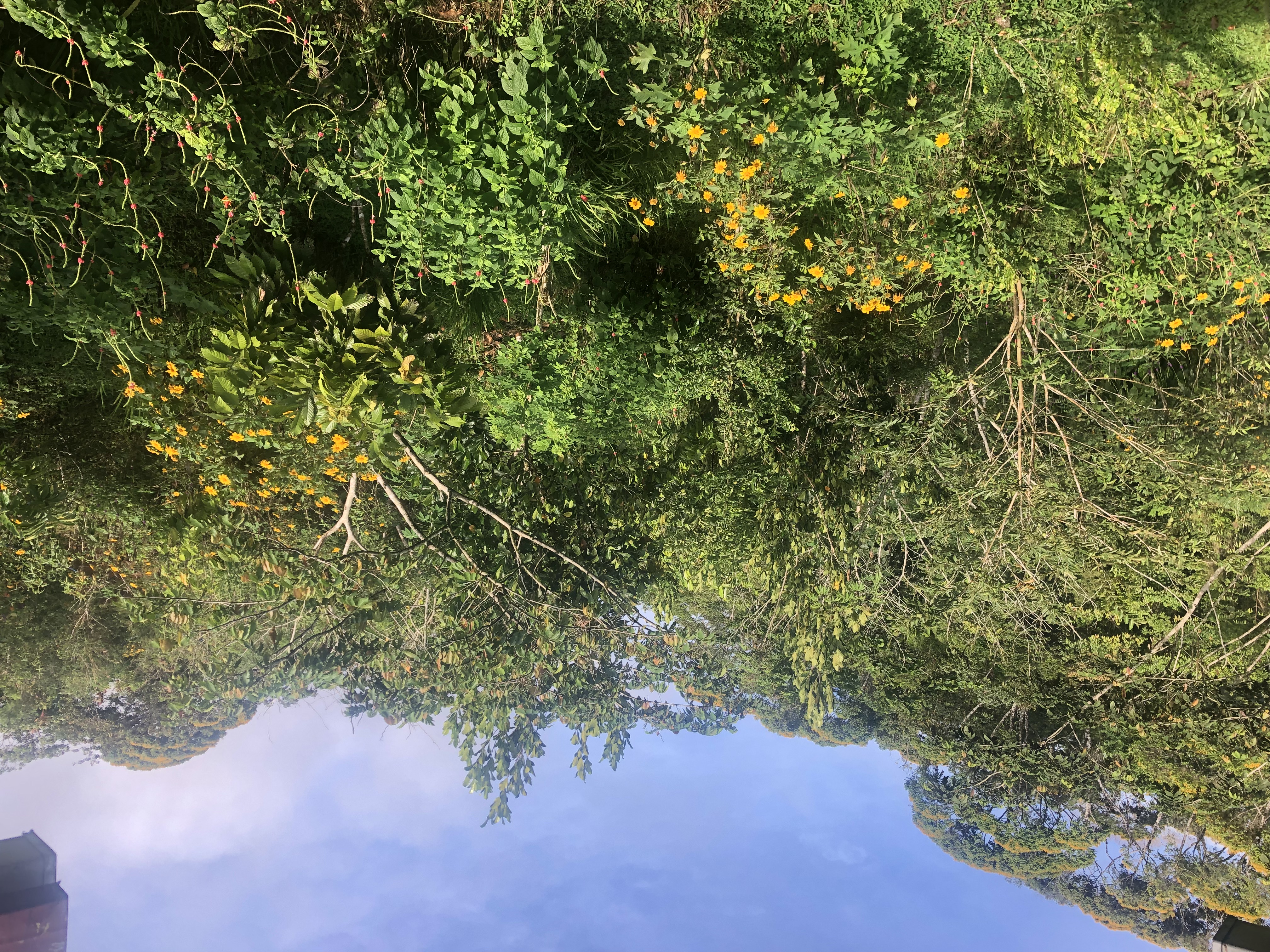
These are the tasks I normally specialize in because they require a profound knowledge of all the surrounding plants. Not being able to do my job efficiently troubles me because I know that teaching people this craft is arduous and only works if there's a genuine interest. There are many details to remember, and without a passion for it, I don't see it happening easily. But at the moment, I don't have much of an option but to surrender to the fact that I need to ask for help and that mistakes will probably be made. But at least the job is getting done. Without the help, it would be impossible right now.
Recently, I've faced some of the toughest trials when it comes to my morale. That's ironic because we're well past the hardest hump, which was getting started. This place was literally a cow pasture before, and now it's teeming with thousands of diverse plants—all of them either edible species or support species. Some of our fruit trees are already between five and six meters tall. We've already harvested loads of fruit. We have better tools and are more equipped than we've ever been now that we've been living on site for a while. We have a nursery business that's been making some progress, and we even had a planting job come up in Uvita lately, which I was gingerly able to accomplish with the help of my father.
So what's the deal? Essentially, it has to do with funding. Sure, the nursery earns a bit of money sometimes, and whenever we finally make it back to the farmers' market, there's another little income stream. But that's nowhere near enough to keep up with everything here. I currently have no idea how I'd make ends meet if my father weren't funding this project. Part of the issue is that I'm completely "in his hands" when it comes to most of the money we live on. I never got into this expecting quick monetary returns. I knew that trees were a patience game, but when we started the economic aspect looked different and my dad's grown more concerned. With three children growing up and my dad's advancing age, figuring out how we're going to make do in the future is certainly a test of faith.
It's extra frustrating because my dad constantly goes on about the financial strains, yet he seems to have done little to embrace a more autonomous lifestyle here. We have abundant land and can grow lots more food, yet he's shown no interest in gardening. Even the crops we already have in abundance are ignored. He won't bother harvesting yuca (Manihot esculenta), taro root (Colocasia esculenta), or yams (Ipomoea batatas)—which he claims he doesn't like—but happily buys store-bought, pesticide-grown potatoes every single week. I've had to accept that he just can't be bothered with any of that.
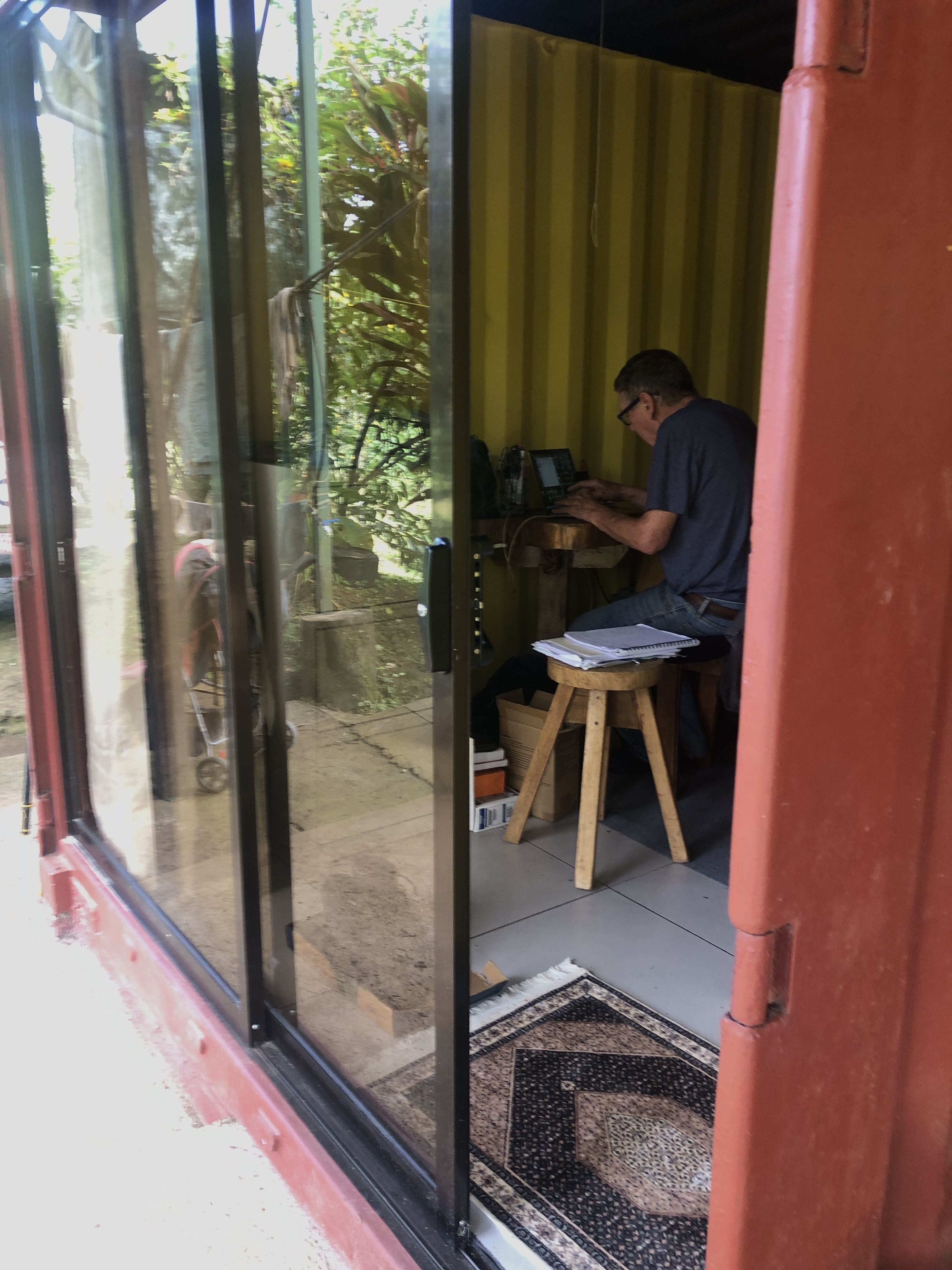
I'll get nowhere by pointing the finger, though, and maybe revealing our hardships is even "bad for business." But I refuse to present a cookie-cutter version of La Floresta. I know full well how difficult it is to pull off this dream, and I've seen many people who've come here with an overly romantic vision of what tending land and forming community really mean. If you don't mind being covered in mud on a regular basis, getting reguarly bitten by an array of insects, drenching your clothes in sweat daily, dealing with mold on anything that isn't perfectly taken care of, and maybe even feeling like your back is broken from time to time, then you could possibly survive tropical agroforestry.
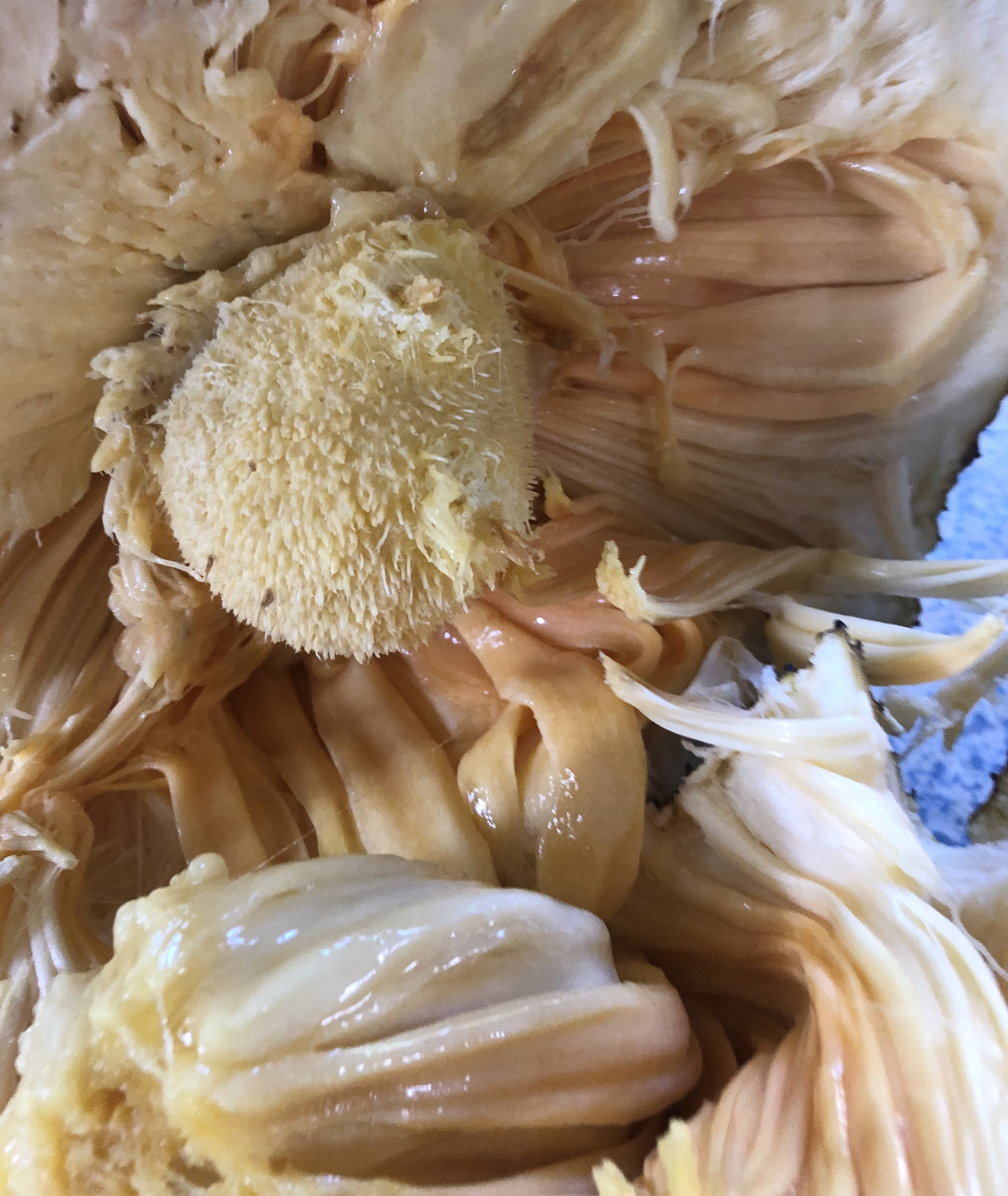
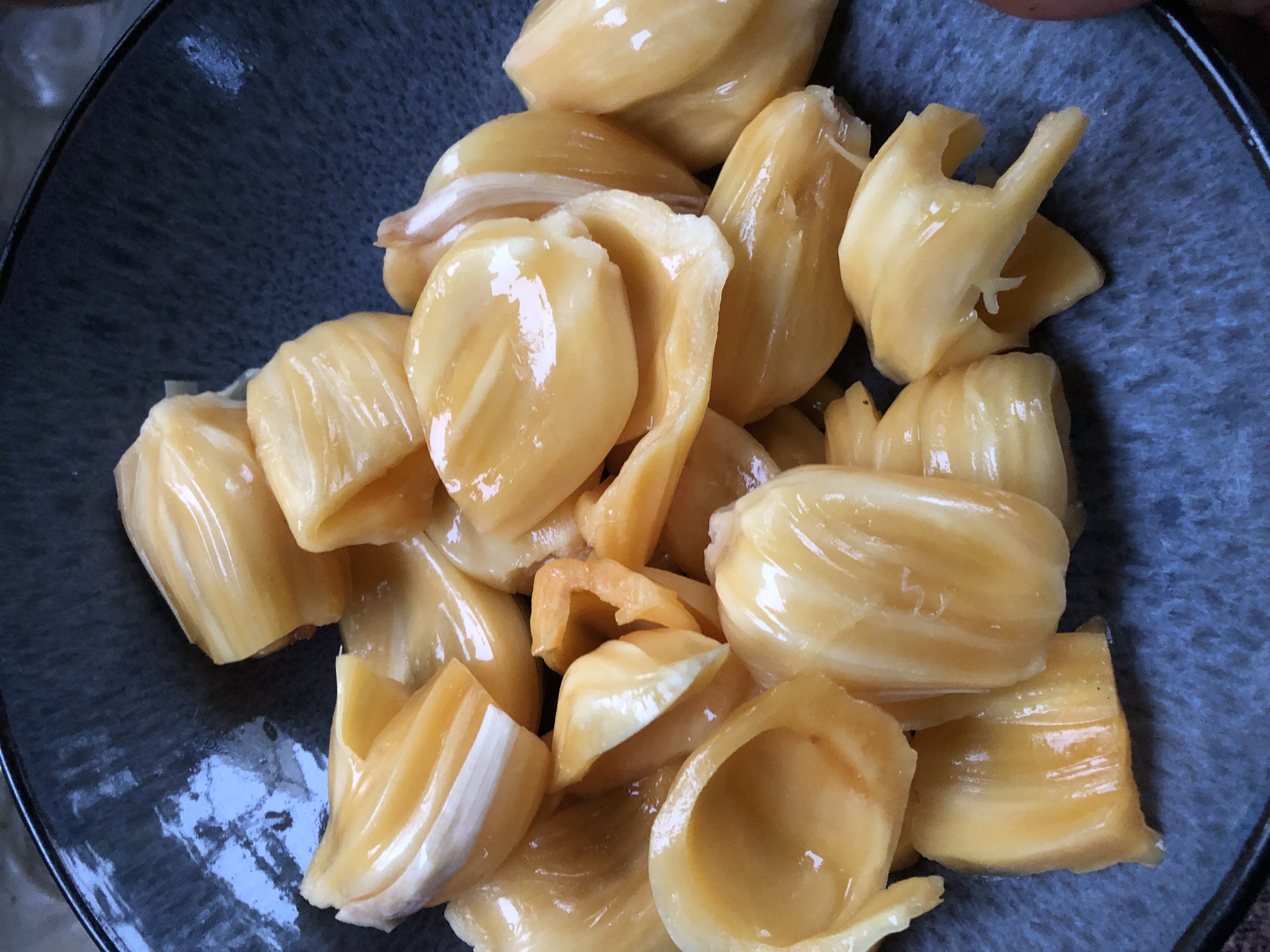
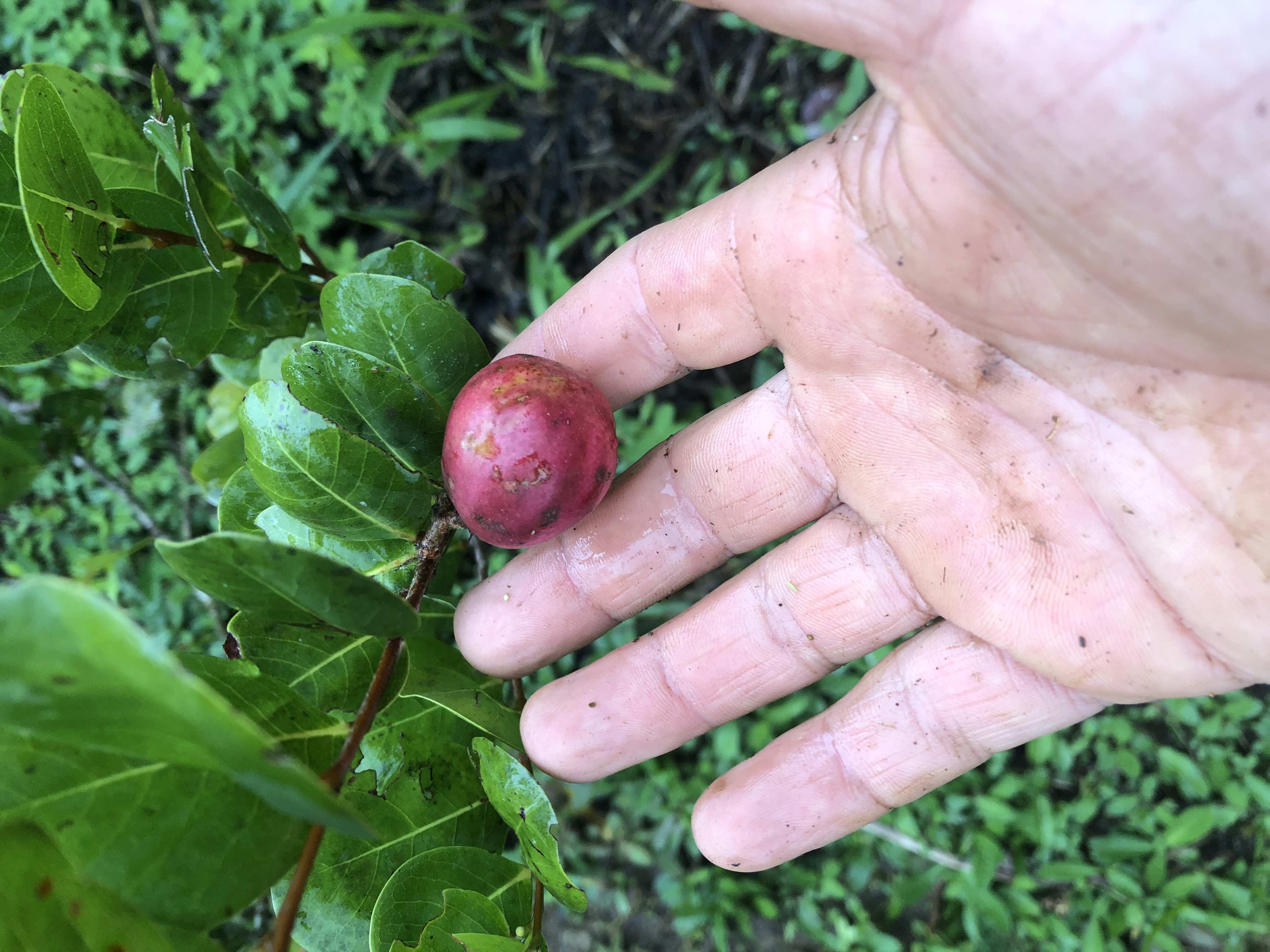
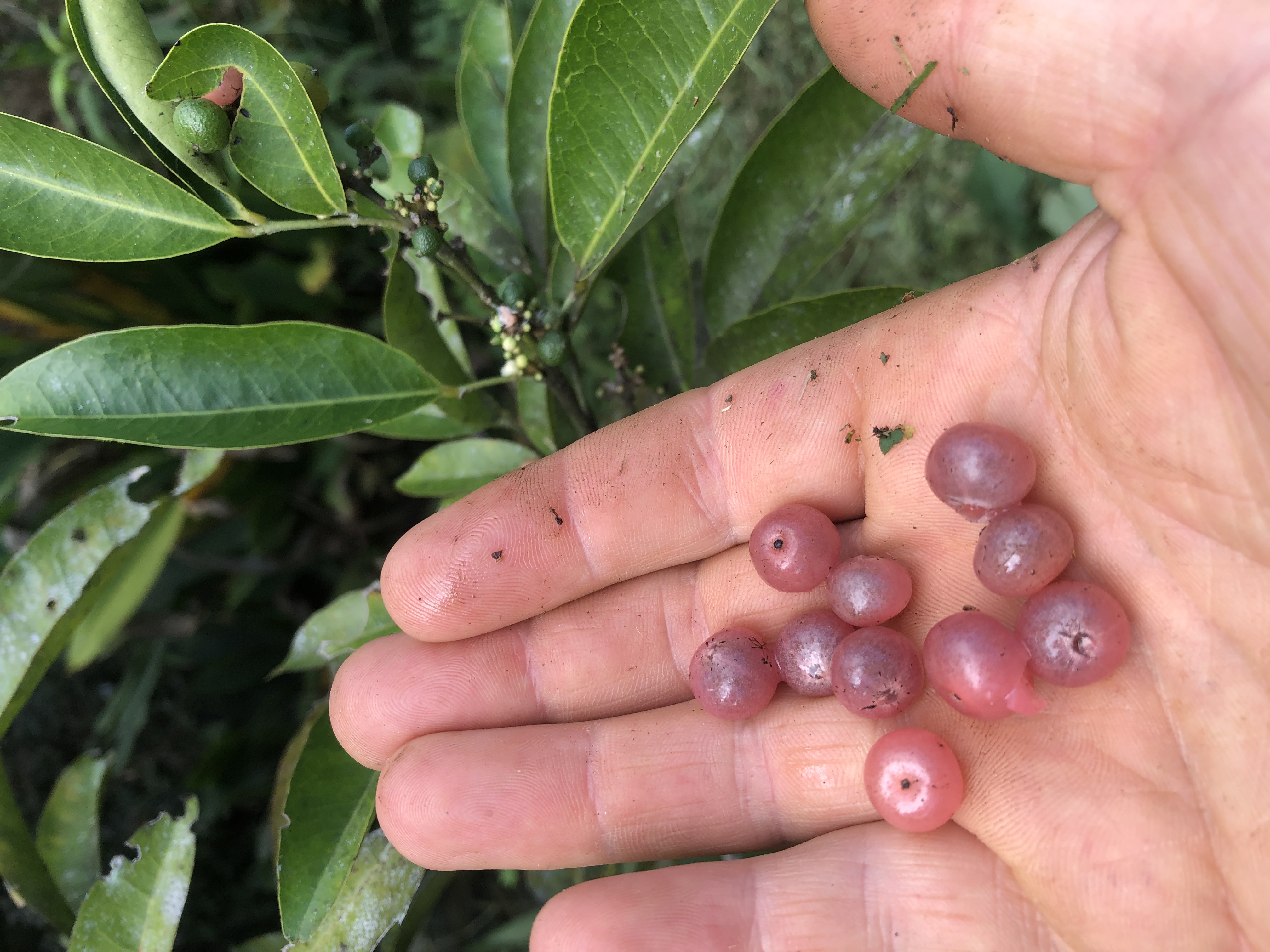
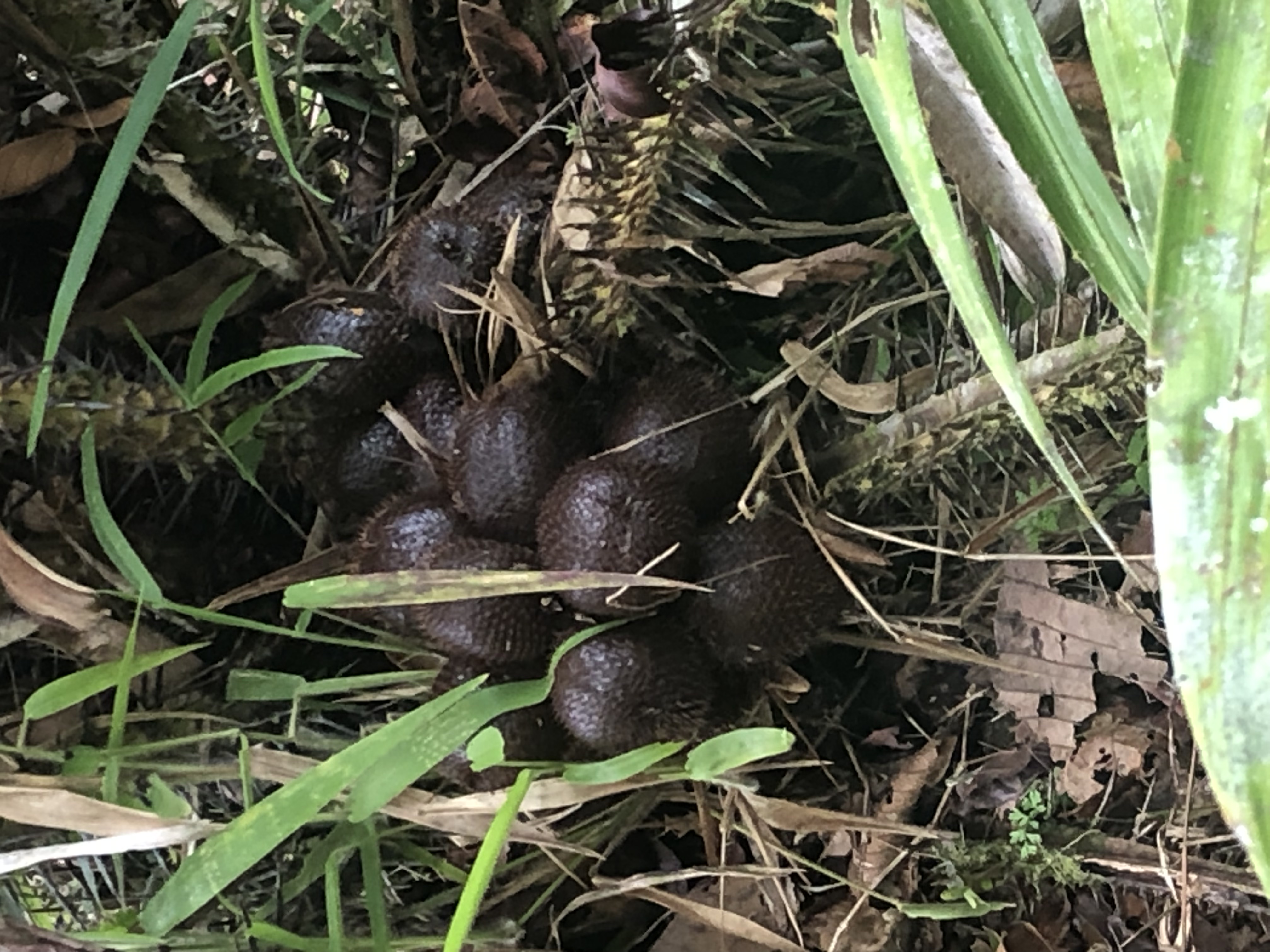
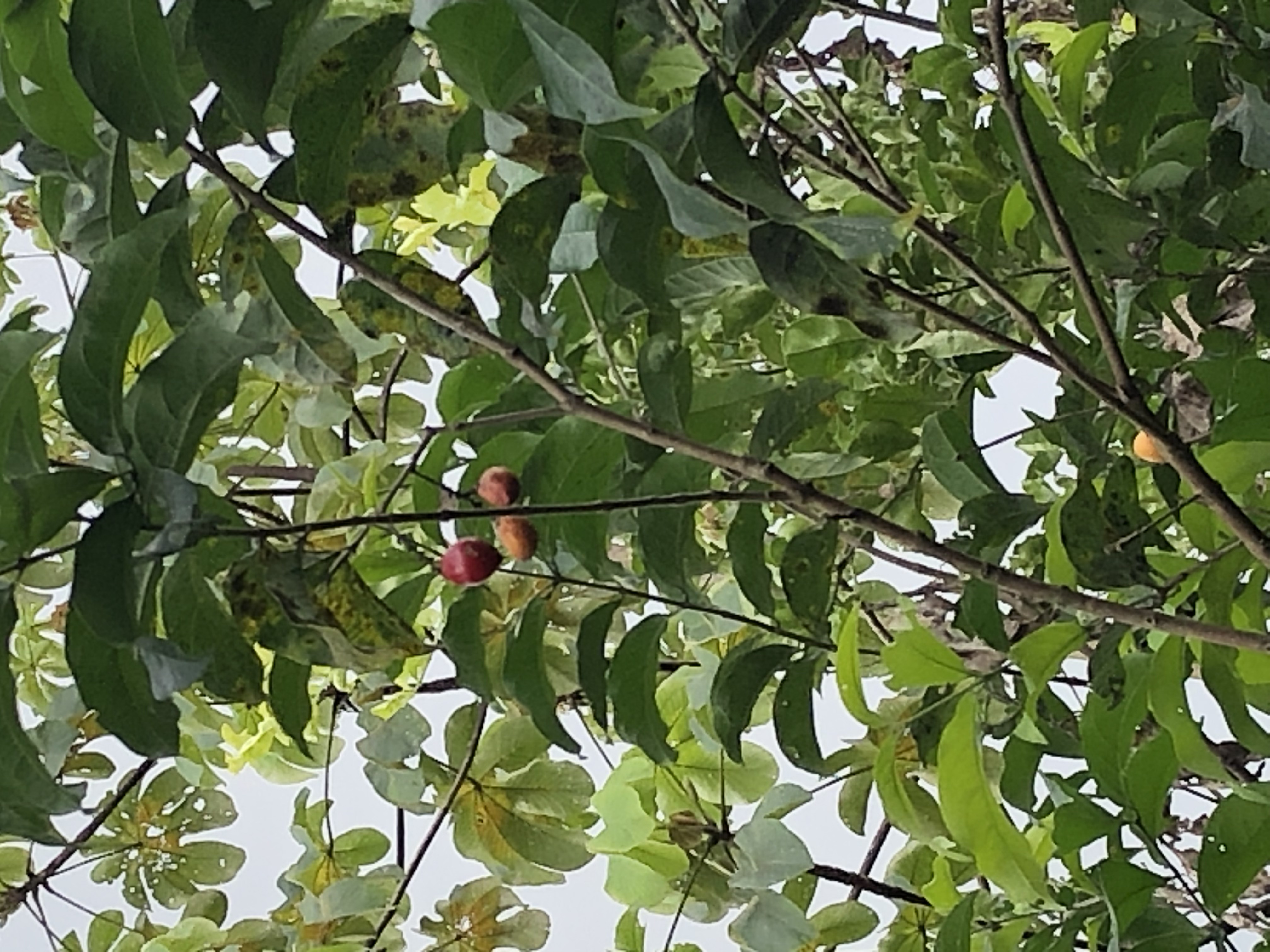
Of course, I'm emphasizing the difficulties. There are loads of things on the bright side that I could bring up, too. For example, we've been harvesting several delicious varieties of jackfruit (Artocarpus heterophyllus), pink cocoplums (Chrysobalanus icaco), gin berries (Glycosmis pentaphylla), snake fruit (Salacca zalacca), peanut butter fruits (Bunchosia glandulifera), and more. I know that this is my heart's path, and I believe in providence—that the farm will be there to lift us up when we need it most. We just need to be patient and keep tending this juvenile food forest with love. That's why I need to recover soon, and that means taking better care of myself. This month, I've learned how even self-care is a matter of the farm's survival. I'd prefer to leave behind the legacy of Johnny Appleseed than J.P. Morgan, but we still need to pay the bills. Ironically, if the econmic system collapsed, we'd probably be better off than many people. Money doesn't create food, but plants and trees do.